
–(Note: This was originally posted in August 2018, and updated after Australian wildfires in January 2020, and withdrawals from Toronto in July 2025)
Imagine playing Madrid, Rome and Roland Garros in the peak summer heat of August instead of the cool days of spring.
Sound outrageous? It is. But that’s what tennis players and fans in North America have to endure. While Europe enjoys tennis events in spring and fall, and Asians get tournaments in September and October, fans across north and eastern Canada have to deal with 35 celsius and 50 percent humidity in Atlanta, Washington, Canada, Cincinnati and New York.
This is one of the reasons why Jannik Sinner, Carlos Alcaraz and Novak Djokovic withdrew in July 2025 from Canada’s National Bank Open, which also saw withdrawals last year after the Olympics.
But event organizers have not responded to this trend which emerged years ago. Amid a heat wave in 2018, Arthur Ashe stadium in New York was nearly empty for early round daytime matches, and Ticketmaster was reselling tickets for 29 dollars. Players, meanwhile, had to endure 50 celsius conditions on court similar to Basra, Iraq this time of year.
Does anybody gain from this situation?
Imagine Novak Djokovic playing in an almost empty stadium in Serbia.
That’s what Milos Raonic did at Rogers Cup 2018 in a 12,000-seat stadium that should bear his name in his native Toronto.
A teenager in Tokyo in 2010, Raonic told me that he wanted to be an “ambassador for tennis” to help grow the game in Canada. More than any other player in Canadian history, Raonic has done that.
His reward? About 200 people (i.e. family and friends) watched him lose to Francis Tiafoe.
—
The poor attendance wasn’t Raonic’s fault, nor was it the fault of moving Denis Shapovalov’s match to the frying pan grandstand at the same time as Raonic’s match.
It’s simply too hot, humid and stormy in late July and early August for fans and players to really enjoy the sport in the peak heat of the North American summer. This is why many players pull out citing various injuries.
Remember the Atlanta Open in July? It used to be too hot for almost everybody except Georgia Bulldog John Isner, and most players were resting after the 3-month European clay and grass swing ending at Wimbledon. Atlanta was cancelled after 2024. It’s no longer a stop on the tour.
Due to extreme heat, Washington’s order of play doesn’t start until late afternoon. Amid the heat of 2018, Andy Murray withdrew after playing until 3 in the morning for two cats and a dog. Local tennis diehards still find a way to attend, but Washington doesn’t get the attention it should.
Canadians love tennis as much as ever, thanks to Daniel Naster, Raonic, Genie Bouchard, Vasek Pospisil, Felix Auger-Aliassime, Shapovalov, rising young player Gabriel Diallo, and successful women such as Leyla Fernandez and Bianca Andreescu.

Staff and volunteers in Toronto and Montreal also work hard for low or no pay to put on a good show for fans. But late July and early August is the worst time of the year to be in southern Ontario (where I grew up playing tennis from age 9). Many people take holidays at a lake or cottage to escape the heat and humidity. This also deters tennis fans from elsewhere in Canada or the US. It’s hotter than hell walking from the Pioneer Village subway station, about 30 minutes ride from central Toronto, to the Aviva tennis center, planted between highways in the suburbs. There was a lack of shade and water last time I was there.
But Toronto is gorgeous in September and October, especially if leaves are changing color. So is Montreal, and Cincinnati, and Washington. This is why the tennis tour should move these events back a few weeks. Europeans enjoy spring tennis. North Americans would love fall tennis.
This would give tennis players — and fans — a well-earned one-month holiday from tennis after the long, intense drama of Wimbledon, the pinnacle of the sport. (The Championships usually end around July 15.)
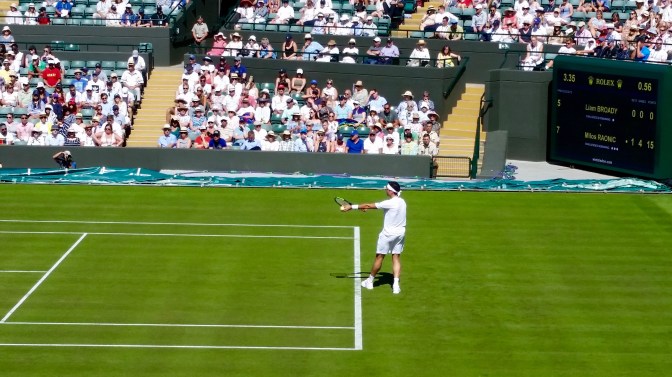
In theory, you could stage Toronto or Montreal circa August 19-26, then Cincinnati August 27 to Sept 2, then run the US Open from September 3 to 16 or even a week later if needed. You could then schedule Washington to cooler weather AFTER New York, or hold it earlier in the year after Indian Wells and Miami.
Or, if Cincy and New York won’t budge, you could move Toronto or Montreal after the US Open to enjoy the spectacular fall colors. (If you think the Canadian weather is too cold in mid-September, try living in Montreal or Toronto in January, when hockey and basketball games still sell out.)
Yes, hurricanes can lash the east coast in September, but the US tennis center in New York added roofing a few years ago.
Yes, US sports media coverage is focussed on baseball playoffs, college football, NFL, NBA, NHL and other events in the fall. But tennis is already a niche sport with a strong, loyal fan base and its own tennis channels. Tennis fans will come if the weather’s good, as they do at springtime European events competing at the same time as soccer.
Yes, there’s extra prize money for winning the “US Open series” of events culminating in New York. But is that worth hampering attendance and TV ratings for Washington, Canada and Cincy?
A grand slam doesn’t have to end a season on a surface. The winter hardcourt season doesn’t end at the Australian Open in Melbourne; it continues in Dubai, Acapulco, Indian Wells and Miami.
It simply makes more business sense to move Canada and Cincy to less hostile patterns of weather later in August, and schedule Washington for cooler weather .
A revised schedule could also suit better tennis weather in Asia. It’s better to avoid the September typhoon season in Japan and enjoy the spectacular fall days of October. Beijing an other cities in China have better air quality in October than September, which can see oppressive heat around Guangzhou and Shanghai.
Since the European winter season events are indoors anyway, you could play Basel, Paris-Bercy and the ATP finals in London in November-December without much difference. Then players could have a one-month winter break to go along with their one-month summer holiday after Wimbledon.
Laver Cup and the various revisions of Davis Cup could work within this schedule as well.
Everybody wins. Canadians would play in front of full stadiums in the cooler weather of late August with families and kids back in Toronto preparing for school. Cincinnati would continue to enjoy its prestige as one of the oldest and best-run tournaments in the world, and not have to deal with sunburn, rain delays and a parking lot quagmire. New York is ready to deal with whatever nature serves its way. Washington would get more of the attention it deserves instead of being forgotten after Wimbledon. And more players would enjoy the fresher autumn air of Tokyo, Beijing and Shanghai. It’s worth trying.
(words and images by Christopher Johnson Globalite Media, all rights reserved)

 Grand Slam Magazine
I mean that week at Rogers Cup was a mess with the rain and storms almost every day. That’s the reason Shapo had to be moved and a lot of people were torn between which match to go watch – ideally it would’ve been both!
Another solution is to put a roof on one of the courts. Also the grandstand court in general is not fit to be a secondary court at a masters 1000 as its football stand bench style seating is very uncomfortable during long matches.
Also more players are naturally getting injured nearing the end of the gruelling season, that is just a fact as they aren’t fresh like in the spring.
LikeLike