
You’ve seen this before. In Act One, the teen phenom arrives on the scene and wins a few matches (before opponents can dissect her game). Tennis media, seeking a scoop, proclaim her the next WTA superstar, with comparisons to Chris Evert, Steffi Graff, Monica Seles, Martina Hingis, Maria Sharapova or Serena Williams.
In Act Two, she rockets up the rankings. She wins a tournament (typically beating an aging legend). Media hype the “passing of the torch”. The tennis industry and media propaganda machine push her button, because their business model is based on selling teen phenoms (and their sponsored gear) to teenagers and their parents.
Agents negotiate huge endorsement deals. Sports Illustrated, Vanity Fair, Vogue and other magazines turn her into the hottest model on the catwalk. Though she’s still living with her Mommy or learning how to drive, the tennis world expects her to revolutionize the sport, give a voice to the voiceless, and create opportunities for under-developed tennis markets in China, Japan, the UK, Canada or Black America.
But in Act Three, she fizzles under the spotlight. She struggles with injuries or mental health, and then fades into history, as the directors cast a new girl in her role.
A few names of lore come to mind: Andrea Jaegar, Jennifer Capriati and Anna Kournikova. Genie Bouchard, Jelena Ostapenko and Sloane Stephens. More recently, Naomi Francois Osaka, Bianca Andreescu, Amanda Anisimova, Coco Gauff, Leylah Fernandez and Emma Raducanu.
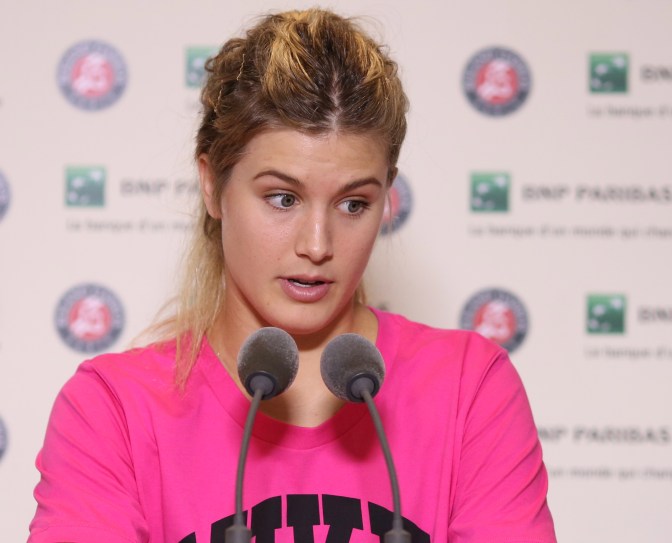
Now along comes Mirra Andreeva, age 16. Before Wimbledon, she had climbed 200 rungs up the WTA ranking’s ladder this year. At Roland-Garros, she was the youngest female in two decades to make the final 32, and she nearly beat Gauff. Last week, with a Netflix crew filming her, she won matches at Roehampton to qualify for Wimbledon.
The official Wimbledon website, featuring her on Day One of The Championships, noted that “she’s based in Cannes, which seems fitting, as there’s something cinematic about Mirra Andreeva’s fast rise.”
Andreeva, a Russian who trains in France alongside her sister and Daniil Medvedev, said she was excited to play at Wimbledon. “I’m still falling though. I think I’m the person who falls more than anybody else. I didn’t feel confident at all when I came here. I tried to do my thing. I was thinking, you have you no expectations, you just play, it’s your first tournament on grass. It’s already perfect that you managed to get here.”
In the main draw, Andreeva reached the fourth round, and led Madison Keys 6-3, 5-1 before succumbing to the pressure. She was penalized for throwing her racquet after losing the second set. In the third set, she seemed to cry after going down 1-4. Then, at deuce in the final game, she appeared to drop her racquet after slipping, which players often do to avoid wrist injury. But umpire Louise Azemar Engzell penalized her for racquet throwing, giving Keys match point, which she converted.
“It’s a lot of positives to take from this week,” said Andreeva, who refused to shake the umpire’s hand after the match. “I kind of didn’t expect to go that far in Wimbledon because first time on grass, I had no experience at all. I passed quallies. It gave me a lot of confidence. I hope that next year I will do better here.”
Keys praised Andreeva’s serve and movement. “She’s 16, she’s very free, going to play some of her best tennis. It’s tough being on the other side of the net of a 16-year-old who is really playing with nothing to lose and you’re the one that’s supposed to beat her. I think she’s a really great player on top of all of that. I think she moves incredibly well, especially from a younger player. You don’t normally see them already have the ability to get in and out of corners the way I saw her doing today.”
With Osaka absent, and Andreescu struggling, and Gauff misfiring on her forehand, and Fernandez talking about her “love and hate” for tennis, and Raducanu saying “sometimes I wish I never won the US Open”, Andreeva has a chance to become the next savior of the sport. It’s easy to imagine such headlines:
—Mirra looks in the Mirror and sees Greatness
—Andreeva is the next Andreescu
—Mirai (Japanese for “future”) belongs to Mirra
Before this happens, and before she becomes the next disposable girl for the business model, the tennis media and industry should heed the advice of other prodigies.
For example, Raducanu, out of Wimbledon and the top 100 with a wrist injury at age 20, has described the tour as “completely brutal”. “When I won I was extremely naive,” Raducanu told The Sunday Times. “The tour and everything that comes with it, it’s not a very nice, trusting and safe space. You have to be on guard because there are a lot of sharks out there. I think people in the industry, especially with me because I was 19, now 20, they see me as a piggy bank. It has been difficult to navigate. I have been burnt a few times. I have learnt, keep your circle as small as possible.”
“What do they expect,” responded WTA founder and feminist icon Billie Jean King, now 79 years old. “It’s difficult, but you chose to be an athlete. With that goes things you have to look at. It’s competitive,” King told CNN. “You have to ask for help if you need it. Girls are not socialized to do that.”
Tennis legend John McEnroe, who studied at Stanford University in California amid success at Wimbledon, told US media that: “One of the reasons why I think kids go to college is that it gives them time to grow up and mature so they can handle things if and when something like this happens. So it’s more difficult when you’re an 18-year-old and all of a sudden your world changes so drastically.”
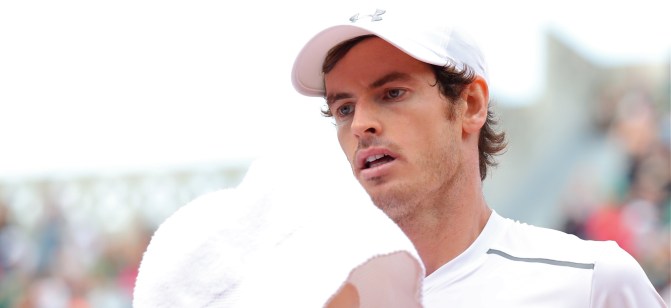
Andy Murray, playing with a metal hip at age 36, said he felt sorry for Raducanu, Carlos Alcaraz and other young players under pressure due to their overnight success. “There’s nothing that prepares you for that. You’re still at that stage where you don’t really know yourself. You’re still very self-conscious about things and you’re constantly changing. It’s really difficult when you’re young,” Murray told the Evening Standard. “It’s just this changing of your whole life. You can just go out to the supermarket, a restaurant, the movies, do what normal people are doing. Then all of a sudden you do that and people are asking for your photograph and you’re getting followed by paparazzi and maybe your friends start seeing you a bit differently and you don’t necessarily know who to trust because lots of people then want a piece of you. Your family are trying to do the right thing for you but it’s new to them as well.”
King says that the WTA has been “fantastic” with mental health for years, while often keeping matters private. “Believe me, since the ‘80s and ‘90s, the WTA has been on this. We have psychologists for whatever you need.”
The WTA claims that they have a “Mental Health Care Provider” available in person at tournaments, including all four grand slams, plus virtual meetings available upon request between tournaments. CNN reports that the WTA also offers player development programs that bring rookies and veterans together and provide media training sessions, education for the players’ support teams and “advantage programs” that offer advice in terms of business and coaching.
But Murray, among others, says the sport “has to do a better job of educating and protecting players in those situations” because young players might not be ready to choose good coaches, physiotherapists and support teams. “It’s really hard because at 18 you don’t know anything. You don’t know what makes someone a really good tennis coach, what makes someone a really good physio. It feels like tennis is quite back-to-front.”
As for Andreeva, she can learn from Raducanu’s rise and fall. “In 2021, she did amazing. Everyone was impressed. I think she was impressed also. To pass qualifiers and win a grand slam at 18 is amazing,” Andreeva told media at Wimbledon after reaching the fourth round. “But me, I just try to not think about it. I think it’ll disturb me, all these thoughts… I just try to play every match.”
words and images copyright Christopher Johnson Globalite Media all rights reserved

 Grand Slam Magazine